Showing posts with label Science. Show all posts

Monday, August 7, 2023

No, Aliens Have Not Been To Earth

We're still not sure about these facts, but our Milky Way Galaxy contains around a trillion stars, and there are estimated to be a trillion galaxies in our Universe. Doing a bit of math, there are a trillion trillion stars in our Universe.

Astrophysicists seem to find more and more evidence that intelligent life is rare, but with that many solar systems, there certainly could be intelligent life out there.

'Out there' is meant literally, because they ain't (sp?) here. Why?

Our galaxy is about 100,000 light-years across, so any star within 100 light-years of Earth is very close to us.

(As a refresher, a light year is the distance light can travel in one year. Light travels at about 180,000 miles per second, so a light year is about 6 trillion miles).

Einstein famously said that the speed of light in a vacuum is the fastest possible speed. One hundred years later, we've confirmed this in many ways. (Yes, Star Trek and Star Wars have variations of a warp drive enabling them to travel much faster than light, but you might know these are fictional shows). 

It took us about three days to get to the Moon, traveling about 6 miles per second. At this speed, it would take us over one million years to travel 100 light years.

No spaceship traveling with people or aliens is going to do this. Heck, it will take us 6 months to get to Mars. Sending robots is no problem. Sending people will likely result in death. Elon Musk, who wants to send people to Mars, said that he would not want to go because he doesn't want to die.

------------------------------------

Let's move on to other reasons. A number of scientists and others have said that they've seen alien body parts and/or alien spaceship parts on Earth, but the government has kept this from us. This can't be true because someone would have sneaked them out or taken pictures of them. After all, it's not like this is a big national security issue. Ben Franklin said, "Three can keep a secret if two are dead". There's no way that we have physical evidence of aliens on Earth without someone bringing it forth. Yes, Congress has had hearings about aliens coming to Earth, but I'll bet my right arm that no evidence will be provided.

---------------------------------

Furthermore, if aliens had the incredible technology to get to Earth, wouldn't they be able to land here without crashing?

And why come to Earth? Certainly not for our resources as the aliens did in the excellent movie, Independence Day. An advanced civilization would have recycling down so they would not run out of resources. Even if they did, they could find them somewhere in their solar system, without trying to destroy a populated planet.

They would only come to make contact with us. They'd stay in orbit and communicate with us, and ask if they could land. Sure, we'd say. How cool would that be?

The only realistic hope is that aliens would try to communicate with us. SETI's purpose is to look for such things. Their message would take 100 years to get here, and our response would take 100 years to get back. Getting such a message would be the event of the millennium.

But you know what they say about long distance relationships.


PS: We'd love to have Yoda in Texas.


Wednesday, March 30, 2016

Robots are here to stay, like it or not

Here's a semi-serious look at robotics.
 
There are more robots being built this year than in any previous year in humanity's history. And this may be true for next few decades.

Of course, almost everyone who is anyone has a working replica of "Robby the Robot", who was in more movies and TV shows than R2D2.


Robby is very useful around the house, but he was not very good at changing diapers, because of his claw-like hands. (Sadly, my daughter still has nightmares because of this). (Frankly, she still has nightmares about me changing her diapers).

All seriousness aside, almost no robots made these days look like Robby. Let's define a robot as a mechanical or artificial agent, usually an electro-mechanical machine that is guided by a computer program or electronic circuitry.

Here's a useful robot that does welding:


And here's a robot that runs fast:


Special Forces use robots that look and move like snakes, and that have cameras and microphones, in order to sneak around inside of buildings to scope them out and check for bad guys.

Robotic snakes can also be used for search and rescue.

More importantly, they can scare the heck out of your girlfriend. (A word of warning for you married guys. Do not try to scare your wives with a robotic snake. The aftermath is not worth it. Trust me on this.)

Here's a working, headless snake from Carnegie Mellon:


How about drones?


They're reproducing faster than rabbits. Your next Amazon delivery might be from a drone.

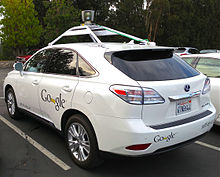
And how about self-driving cars?


They are robots, too.

Robot insects? Yes. Maybe they could fly around your house looking for harmful insects and zap them. I'll hold off on these for a few years.


But you can hold down costs by buying in bulk:


There are literally thousands of kinds of robots that are getting more useful on a daily basis. And, right now at least, it takes humans - lots of humans - to design them.

So if you're interested in designing robots, there may well be a job for you.

Will SkyNet eventually take control of these robots to rid itself of humanity? Apparently, Terminator IX will answer that question for us.

Tuesday, September 22, 2015

Was Evolution Guided?

Introduction 

The current and most commonly accepted theory of evolution is frequently called the Neo-Darwinian Synthesis. Its basic thesis is that the laws of nature, and natural selection operating on random processes, accounts for how life went from single-celled organisms to all the species on Earth today.

Here are a few facts that are pretty much accepted by scientists. The Earth is about 4.5 billion years old. Fossil evidence for the earliest single-celled organisms seems to point to life starting around 3.8 billion years ago, shortly after the Earth cooled enough to support life. 

Life mostly consisted of single-celled organisms until about 600 million years ago, when we have evidence of quite well-developed animal phyla. This occurred during the Cambrian Explosion – an explosion of life.

So life went from single cells to humans in about the last 600 million years. 

The Fossil Record

The fossil record is pretty clear about this. But what the fossil record does not show is what Darwin expected - a gradual change from one species to the next. Rather, it mostly shows many species remaining fairly unchanged for a few million years, and then dying off and replaced by entirely new species. Stephen J. Gould called this 'punctuated equilibrium'. 

Here's a quote from the Wikipedia article: "Punctuated Equilibrium is a theory in evolutionary biology which proposes that once species appear in the fossil record they will become stable, showing little net evolutionary change for most of their geological history. This state is called stasis. When significant evolutionary change occurs, the theory proposes that it is generally restricted to rare and geologically rapid events of branching speciation ... the process by which a species splits into two distinct species, rather than one species gradually transforming into another. Punctuated equilibrium is commonly contrasted against the belief that evolution generally occurs uniformly and by the steady and gradual transformation of whole lineages." 

Evolutionary biologist Ernst Mayr complimented Gould's paper, stating that evolutionary stasis had been "unexpected by most evolutionary biologists" and that punctuated equilibrium "had a major impact on paleontology and evolutionary biology". 

Today, the fossil record still supports Punctuated Equilibrium and the late Stephen Gould and others have made numerous attempts to explain it. 

But none of these attempts seem to be satisfactory. And there is no currently accepted theory as to why punctuated equilibrium occurs.
 

Explaining the Fossil Record 

Let me be clear. Gould and most evolutionary biologists believe that there is a purely naturalistic explanation for punctuated equilibrium. I do not.

Why? Because as a Computer Scientist, I am familiar with 'evolutionary algorithms' that attempt to simulate aspects of evolution. But unless programmers build (their own) intelligence into these algorithms, only minor changes are found. And the faster computers today operate at trillions of operations per second. I see no computer evidence that comes anywhere near showing that Neo-Darwinism can explain these rapid evolutionary changes.
 

What can? Think about the automotive industry. Modern cars started with the first internal-combustion-engine cars. Each year slight changes were made. And then a new model would come out that had major changes. But any major change (say involving the transmission) necessitated major changes in many parts of the car to work. This is how cars have evolved. Major changes in new models did not come about by small changes. There had to be many changes that were designed into any new model. And you can apply the same reasoning to virtually any device such as smart phones. 

And this seems very similar what the fossil record looks like. Insignificant changes over large periods of time, resulting in the same species being around for large periods of time. And then large changes in a short period of time resulting in entirely new species.  

But who was responsible for the evolution of cars and smart phones? Human intelligence, of course.

Conclusion 

So I've concluded that the evolution of life was also guided by an intelligence or intelligences. (The intelligences behind evolution had to be incredibly capable, but they do not appear to be 'perfect' because the fossil record does not show perfection in the evolution of life).

The hypothesis that the evolution of life was guided fits the fossil record, and fits with what we know about the weaknesses of evolutionary algorithms. So I believe that it is the best explanation as to how entirely new species occurred. This is a perfectly valid scientific hypothesis, because it can be falsified. 

And I am open to it being falsified. It would not change my worldview at all. My conclusion is based on the evidence. If evolutionary biologists come up with a plausible way that life could have evolved naturalistically, I will happily accept that.

My advice is, don't hold your breath waiting for it.

______________________________________

Tim Farage is a Professor in the Computer Science Department at The University of Texas at Dallas. The views expressed herein are those of the author. You are welcome to comment upon this blog entry and/or to contact him at tfarage@hotmail.com.
______________________________________

Friday, December 19, 2014

Intelligent Design - What does Intelligent Design Mean?


Introduction
This is first part of a series of posts about intelligent design (ID).  Intelligent design has been vilified by some scientists who feel that it is religion encroaching upon science, which it does not. And it has also been conflated with creationism, even though creationism starts with assumptions that the Bible is to be taken literally, and ID is a scientific technique that has nothing to do with any religion.
The first part of this series will deal with exactly what ID means. Later parts will bring forth some of the scientific evidence that support the involvement of an intelligence in the creation of the Universe and in biology. The last part will deal with the implications of intelligent design upon both science and religion. 

In April 2007, at Southern Methodist University (SMU) in Dallas, I had the good fortune of attending a two-day conference on intelligent design , sponsored by the Discovery Institute based in Seattle.  Four very smart and well-spoken scientists made presentations all related to the thesis that there is compelling scientific evidence that various aspects nature and the Universe exhibit design by an intelligent agency or agencies.

Does this idea shock anybody?  One would think it wouldn't shock too many people since most people in the world, quite sensibly, believe this to be true, usually assuming the intelligent designer is God (although ID says nothing about the identity of the designer). One would be hard pressed to find a single thoughtful person in the world, scientist or not, who has not asked, how did the world get here?… how did life begin?… how did humans come about?… why are we here?…  without considering that an intelligent agency might have been somehow involved.  And since this is certainly a logical possibility, one would assume that it is therefore open to scientific inquiry and the free exchange of ideas, especially on college campuses.

But one would be quite wrong in that assumption!  This is hard to believe but many professors at SMU were trying to get the conference banned.  According to an article by Jeffrey Weiss, a staff writer for the Dallas Morning News, “Science professors upset about a presentation on intelligent design fired blistering letters to the administration asking that the event be shut down.”  After the intelligent design group heard about this they asked the chairmen of the some of the science departments at SMU to send representatives to the conference to present their objections, but they all declined.  In a formal statement by many of the science professors as SMU, one paragraph stated:

“We are, however, vehemently opposed to the deliberate deception of presenting politically motivated religious viewpoints as science. It is destructive and antithetical to the usefulness of science, and history has shown that similar politicizations of science have been incredibly destructive to our moral, ethical and material progress.”

Would you be surprised to find that this was written before the conference took place?  At least they could have actually attended the conference before criticizing it.  And if they did, they would have found that no religious viewpoints were discussed, but rather all four scientists gave scientific evidence that an intelligent agency or agencies likely influenced  nature in a variety of ways – from the creation of life on Earth, to the evolution of life, and to the creation of the Universe itself.

The quote above from the SMU scientists is fairly typical of those who do not understand what intelligent design is, and those who, intentionally or not, misrepresent it.  Hence, my intention in the first part of this series is to briefly explain what intelligent design is and what it is not.

----------------------------------------------------

So what exactly is intelligent design?  It is an inference, based upon scientific evidence, that some object or event was designed or influenced by an intelligent agent or agencies.

Note that this says nothing about the intelligence involved.  Indeed, the intelligent agent could be human, an animal, an alien life form, or a non-physical intelligence.

Let’s start with a relaxing example.  Go to your window and look outside at the nearest mountain that you see.  Perhaps it looks like this:


If someone asked you if this mountain had been designed, you’d have to be honest and say that it didn’t appear to have been designed, and that you assumed that its shape was the result of numerous factors such as wind, rain, erosion, plate tectonics, etc.

But suppose instead you saw this mountain:


If someone asked you if the visages on this mountain had been designed, you say, “Of course it was designed.  It’s Mount Rushmore.  Those are carvings of the faces of four of the most famous presidents in our country’s history.”

Even if an alien civilization came to Earth sometime in the future and saw Mount Rushmore, they would immediately conclude that it had been designed.

How can we reliably distinguish between whether an object or event was designed by an intelligent agency based upon sound scientific evidence?

The best explanation as to how one can make an intelligent design inference comes from the mathematician, Dr. William A. Dembski in his book, The Design Revolution.  I use and simplify some of the ideas from his book. 

The Intelligent Design Inference 

In order to conclude that an object or event is the result of design, it must pass through a 2-stage process.

The first stage is that the object or event being studied must have an exceeding low probability of occurring though purely naturalistic processes.

How low must the probability of an event be for it to pass the first stage?  There can be no definitive value, but the safest one to choose would be 1 in 10150.  This is a very small probability.  It’s about equivalent to the same person winning the Texas Lottery twenty-four times in a row. It is so low that such an event is very unlikely to occur anywhere in the Universe since time began about 13.8 billion years ago.

It is actually easy to come up with hundreds of low probability events. Look at the cars parked in a large mall on Saturday afternoon. Then look again the next Saturday. Barring a zombie apocalypse, the probability that the same cars were parked in the same parking spaces is virtually zero.

Here’s another example of an extremely low probability event.  You might find this hard to believe.  Suppose you randomly shuffled a standard deck of 52 cards. The probability of getting that arrangement of cards is about 1 in 10 thousand billion billion billion billion billion billion billion. This is such a low probability that if all 7 billion people on Earth were somehow able to shuffle a deck randomly a trillion times a second since the beginning of the Universe about 14 billion years ago, there's almost no chance that anyone would come up with the same arrangement of cards that you got.

But, as the examples above show, knowing that an event had an extremely low probability is not enough to show that it had an intelligent cause. One more ingredient is needed.

That additional ingredient is usually called specificity. It means that the object or event has meaning or information.

Referring to the Mount Rushmore example, the probability is essentially zero that the faces would been created through naturalistic means, such as wind, rain or erosion. But the faces have meaning - they are images of great Americans. These two facts lead anyone to believe that the faces were intentionally created.

If an object or event meets both of these criteria, we say that it exhibits specified complexity, and we can reasonably conclude that it had an intelligent cause.

To summarize, if

1) an object or event has an exceedingly low probability of occurring, and if

2) the object or event is specified – it contains meaning or information – we then say that it exhibits specified complexity, and thus conclude that it had an intelligent cause.

In every case where we know the cause of an event that exhibits specified complexity, we attribute the object or event to intelligent causation.  I mentioned the faces on Mount Rushmore, but how about a cell phone, or a cardinal’s nest, or a house, or even a mousetrap.  All of these exhibit specified complexity, and indeed, we know in every case who or what the intelligent designer was.

But we need not know the identity of the intelligence in order to conclude that an event did indeed have an intelligent cause.  For example, there’s a program called SETI, which stands for Search for Extraterrestrial Intelligence.  The Center for SETI Research has developed signal-processing technology that it uses to search for signals from advanced technological civilizations in our galaxy.  It takes these signals and tries to match them with signal patterns that we have specified as those that might be sent by an extraterrestrial intelligence.  For example, one pattern might be a sequence of the first 1000 prime numbers.  Since the probability of receiving such a sequence is exceedingly low and since this sequence has meaning, it exhibits specified complexity, and we would rightfully conclude that it was sent by an intelligence(s).  But we would have no idea as to the identity of the intelligence (although my guess would be that it’s the Klingons). 

The idea that one can infer an intelligent cause from an event exhibiting specified complexity, doesn’t seem so controversial, does it?  To rephrase what was said above, in every instance where specified complexity is present, and the cause is known (e.g. we know that humans carved the faces on Mt. Rushmore), we have found that the event was designed.

So what is so controversial about the intelligent design inference?  The controversy comes about because a number of scientists are now finding evidence of specified complexity in such things as the constants of the Universe, the evolution of life, and even in the creation of life itself.  And if they are correct, that would mean an extremely capable intelligence was involved, and that it is certainly not human.  This makes some (but certainly not all) scientists very nervous because it reminds them of the ‘G’ word, and we can’t have that now, can we? 

But what is the evidence for an intelligence involved in such things?  Check out future posts about Intelligent Design to find out.
_______________________________________

Tim Farage is a Senior Lecturer and Graduate Adviser in the Computer Science Department at The University of Texas at Dallas. The views expressed herein are those of the author. You are welcome to comment upon this blog entry and/or to contact him at tfarage@hotmail.com. 
______________________________________


Thursday, November 28, 2013

Black Holes

How about a bit of science?

Everyone's heard about Black Holes, but what the heck are they?

First, a little background.  If you throw a ball up from the Earth, it will slow down and eventually fall back to the Earth.  No matter how fast you throw it up, it will always come back down.  Suppose you used a nice, fancy machine to throw it up faster than you can.  Will it always come back down?

Happily, the answer is no.  If you have a very powerful machine, (and we don't have one yet that can do this), that can throw the ball so that when it leaves the machine it is traveling at around 7 miles per second, the ball will go up and never come back down.  It will indeed slow down continuously, but not enough to head back toward Earth.  This speed that an object needs to leave a planet or any other mass, is called its escape velocity.  For instance the Moon has an escape velocity of about 1.5 miles per second.

You can probably guess that the more massive and dense the object, the higher its escape velocity is.

But can an object be so massive and dense so that nothing can escape from it, not even light?  Once again, we are happy, because the answer is yes, and such an object is called, not surprisingly, a Black Hole.

And that's why they are black. Not even light can escape from one.  Do we know for sure that such objects exist?  Not quite.  There is some pretty good evidence for Black Holes, and most astronomers believe they exist.

Black Holes were first predicted as a result of Einstein's Theory of General Relativity, which is actually mostly a theory of gravity. And they are a bit more complicated that they seem.

The outer 'surface' of a Black Hole is called the event horizon.  From the outside, anyone looking toward a Black Hole would see only black within the event horizon.

What would happen if Jill unwisely decided to take a trip in a rocket ship into a Black Hole.  Well, it somewhat depends on the size of the Black Hole.  Right now, our best evidence in that most galaxies have huge Black Holes at their centers.  So she travels toward the center of our galaxy (which would take millions or years at the current speeds of our rockets, so Jill will get very bored and hungry). She could actually travel right through the event horizon and wouldn't even know it.  Sadly, if she tried to get back out, it ain't going to happen.  Just sit back and enjoy the ride, Jill.  Because she will inexorably be pulled toward the center of the Black Hole, a mysterious place called the Singularity. This Singularity contains all the mass of the Black Hole.  Einstein's equations predict that this is a point of infinite density, and no size.  Try not to think about that.

Once she gets close enough to this Singularity, she and her rocket will begin to be stretched toward the Singularity. This is because gravity will be stronger at the tip of the spacecraft than it is at its end. This stretching is actually called spaghettification.  It would not be a pleasant experience, even though it sounds delicious. Once she reaches the Singularity, she will be completely crushed into it, and have no volume.  Do not be concerned about this, as she will be dead long before this happens.

Here's a very interesting phenomena associated with Black Holes.

Let's switch the frame of reference to an observer, Jack, quite a distance from the Black Hole. Jack would see Jill fly toward the large black hole in her spaceship. But Jack would see her ship slow down as it got closer to its event horizon – which is the point of no return.  As time went by for Jack, he would see her ship going slower and slower, and the light he would see coming from her ship would get shifted to the red part of the spectrum, and eventually to shorter and shorter radio waves, so that Jack will never see her ship cross the event horizon- ever!

Who is right, Jack or Jill? That's the thing about relativity - they are both right, from their own frames of reference.  How can that be?  Either Jill flies through the event horizon into the Singularity or she never makes it to the Singularity.

Take about 5 university-level physics courses, and it will be almost make sense.

Almost.

______________________________________

Tim Farage is a Senior Lecturer in the Computer Science Department at The University of Texas at Dallas. You are welcome to comment upon this blog entry and/or to contact him at tfarage@hotmail.com.

______________________________________
 

Global Warming Update 2025

Climate scientists have found that global temperatures have likely risen by 1.5 °C since the Industrial Revolution. So what? You’ll find tha...